


Stop Scaling Chaos: Why Sustainable Logistics Needs Architecture, Not Improvisation
In the high-stakes world of retail and cold-chain logistics, there is a dangerous industry myth that conflates "motion" with "progress."
The myth tells us that the mark of a great logistics partner is heroism. It celebrates the broker who stays awake until 3:00 AM to fix a crisis, the dispatcher who screams at a scheduler to force a work-in, and the operations manager who lives in a perpetual state of adrenaline-fueled reactivity.
We are told that this is what "hustle" looks like. We are told that this is how you scale.
At Lone Cypress Logistics, we believe this is avoidable, and there is a better way.

We believe that relying on pure hustle to move freight is not a strategy; it is a liability. When you rely on individual drive to save the day, you are admitting that your system has failed. "Improvisation" , the act of figuring it out as you go, is the enemy of reliability.
If you build a brokerage or a shipping department on the backs of heroes, you cannot scale. You can only scale chaos. As you add more volume, you add more noise, more stress, and more points of failure, until your best people burn out and your customer service collapses under the weight of its own disorder.
Sustainable growth does not look like a fire drill. It looks like a checklist. It looks like "boring" consistency. It looks like a machine that runs quietly because every variable has been accounted for before the engine was ever turned on.
Effort matters, but effort without structure is just chaos.
To move thousands of cold-chain loads a year into the nation's strictest retail distribution centers without burning out our team or failing our customers, we had to stop improvising. We had to build a framework, the LCL Operating System, that engineers the chaos out of the supply chain.
This is the blueprint of that system. We are opening our playbook to demonstrate how we replace improvisation with protocol across the four critical dimensions of logistics: The Shipper, The Carrier, The Road, and The Outcome.
The High Cost of Improvisation
Before we discuss the solution, we must quantify the problem. Why is improvisation so dangerous?
In the modern retail environment, the margin for error has evaporated. Retailers like Walmart, Costco, Target, and UNFI operate on "On-Time, In-Full" (OTIF) standards that treat a logistical failure as a financial breach of contract.
When a logistics provider improvises, when they book a truck without vetting the gate code, or accept a midnight appointment without clarifying the date, they are not just risking a "late load." They are triggering a massive financial penalty for their customer.
The Bullwhip Effect
According to retailer supplier standards, a single failure at the receiving dock creates a "Bullwhip Effect" that destabilizes the entire supply chain.
The Dock Stalls: When a truck misses its appointment, the labor scheduled to unload it stands idle. This inefficiency disrupts the DC's processing rhythm.
The Shelf Empties: This leads to stockouts. Data suggests that 27% of customers will simply switch brands if they encounter an empty shelf, and 14% will leave the store entirely.
The System Panics: Automated replenishment systems verify the stockout and place "panic orders," leading to overstocking ("Early Receipts") in the next cycle, jamming the warehouse.
The 3% Fine
To prevent this, retailers levy fines. A common standard is 3% of the Cost of Goods Sold (COGS) for non-compliant cases.
Consider the math of improvisation: On a standard $50,000 load of strawberries or protein, a single "improvisational error", a missed appointment or a temperature rejection, triggers a $1,500 fine. That penalty often exceeds the freight broker's entire margin on the load.
This is why we say that effort without architecture is chaos. You can work incredibly hard to find a truck, but if you haven't structured the appointment data correctly, you are working hard to lose money.
Pillar 1: Architecture for the Shipper (The Data Layer)

The first pillar of the LCL Operating System addresses the source of the shipment: The Data.
Most "service failures" are not actually driver failures; they are data failures. They are the result of ambiguous instructions, vague appointment times, or unverified constraints passed from the shipper to the broker to the carrier.
Improvisation says: "Take the order, put it in the system, and figure out the details later."
Architecture says: "Plan before wheels move."
The "Midnight Ghost": A Lesson in Ambiguity
Our obsession with data integrity was born from a hard lesson learned years ago, long before Lone Cypress Logistics existed. Our founder, Jason McArthur, was managing a high-stakes load of berries from California to Illinois.
The appointment was set for "Midnight" on a Tuesday. The team did the standard check calls. They spoke to the driver. They verified the time. The driver said he was good to go.
The next morning, the load showed as a "Missed Delivery."
When Jason called the driver to ask what happened, the answer was chillingly simple: "I was sleeping. I woke up disoriented after a long drive. I saw '12:00' on the paper and I thought I had until noon."
The driver didn't fail because he was lazy. He failed because he was human. He was exhausted, he was disoriented, and the data ("12:00") was ambiguous. That single ambiguity cost thousands of dollars. It taught us that you cannot rely on a tired human brain to interpret "00:00." You must engineer the data to make error impossible.
The Systematic Fix: The "Midnight Rule" (11:45 PM SOP)
Today, the LCL Operating System includes a hard-coded SOP to eliminate this ambiguity. We call it the Midnight Rule.
We effectively ban the use of "00:00" or "24:00" on our Rate Confirmations.
If a shipper's system generates a midnight appointment for Tuesday, our brokers manually convert that data point to "11:45 PM (EVENING) Monday".
This 15-minute shift changes the psychological framing of the appointment. It forces the driver to view the appointment as an "End of Day" task, not a "Start of Day" task.
If the driver arrives at 11:45 PM Monday, they are 15 minutes early. Success.
If the driver arrives at 12:00 AM Tuesday, they are exactly on time. Success.
We pair this with a "Double ACK" (Acknowledgment) Protocol. We verbally confirm with the dispatcher and the driver: "This is a night appointment. Are you set up for a night delivery?".
The Feasibility Audit
Architecture also means telling a customer "No" when the physics don't work.
Improvisation accepts every load and hopes for the best. Architecture runs a Pre-Ship Feasibility Check.
Before we accept a tender, we validate the transit math against legal Hours of Service (HOS). If a shipper asks for a 2,000-mile run in 40 hours, we know that a solo driver cannot legally execute that load.
Instead of booking it and "improvising" a solution when the driver runs out of hours 200 miles short of the destination, we intervene upstream. We resequence the appointment. We request a team driver. We reset expectations. We protect the shipper from their own bad data.
Pillar 2: Architecture for the Carrier (The Security Layer)

Once the data is verified, we must secure the vessel.
In the current freight market, the carrier landscape is a "Wild West" of identity theft, double-brokering, and non-compliance. Relying on a simple "Green Light" from a monitoring service is no longer sufficient security.
Improvisation says: "Their authority is active, and they have insurance. Book it."
Architecture says: "Trust is an engineered process."
We utilize the "Iron Gate" Vetting Standard, a rigorous inspection that every new carrier must pass. This is the foundation of our house. If the carrier is weak, the entire structure collapses.
Engineering Trust: The Outbound Callback
The greatest threat to modern logistics is the "Double Broker" scam, criminals who impersonate legitimate trucking companies to steal freight or hold it for ransom. They steal the identity of a reputable carrier, book the load, and then re-broker it to an unsuspecting third party, pocketing the money and vanishing.
To defeat this, we do not rely on inbound calls. We execute Protocol Item #4: The Outbound Callback.
When a new carrier attempts to book a load:
We navigate to the FMCSA SAFER website.
We find the registered phone number for that motor carrier (not the number in the email signature).
We place an outbound call to that registered headquarters.
We ask: "Do you have a dispatcher named [Name]? Did you just book a load from Salinas to Chicago?"
If the registered owner says "No," we have stopped a theft. If they say "Yes," we proceed. This simple procedural step eliminates 99% of identity fraud.
The "Cold Chain" Hygiene Check
Security is also about the physical condition of the equipment. In food logistics, a dirty trailer is a rejected trailer.
We enforce Protocol Item #5: The 24-Hour Washout. We do not accept a driver's word that the trailer is clean. We require a physical receipt proving the trailer was washed out within the last 24 hours. If a trailer previously hauled onions, fish, or chemicals, that odor will ruin a load of strawberries.
The "Heat Engine" Misconception
Beyond cleanliness, we must verify the "physics" of the trailer. This brings us to the single most misunderstood principle in cold-chain logistics: the belief that a reefer trailer is designed to cool product.
The actual use of a reefer trailer is to maintain a temperature, not lower it.
The process of loading warm product and "letting the reefer do the work" is a guaranteed failure. This is because harvested produce, like greens or berries, contains massive amounts of "field heat" and is still respiring, acting as a "heat engine" that generates its own heat. A reefer unit is simply not a blast chiller; it cannot overcome that internal heat generation once the product is stacked in the trailer.
To successfully transport perishable freight, true cooling must happen before loading, using specialized methods to remove the field heat.
Therefore, our cold-chain operations require verification of two distinct steps:
Product Pre-Cool: Verification that the product has been pre-cooled to its optimal carrying temperature.
Trailer Pre-Cool: Verification that the trailer itself has been pre-cooled to the same set-point before the product is loaded.
We do not simply ask the driver if they are ready; we design the verification to ensure the physics are on our side.
Pillar 3: Architecture for the Road (The Reality Layer)
The load is booked. The carrier is vetted. The truck is loaded.
This is where most logistics providers "check out," waiting for a delivery confirmation. But the time between pickup and delivery, the "In-Transit" phase, is where entropy attacks. Tires blow. Traffic jams. Internet connections fail.
Improvisation waits for the phone to ring with bad news.
Architecture hunts for the failure before it happens.
Continuous Monitoring: Morning, Noon, and Night
A check call 24 hours out isn't enough. Conditions change too fast.
We utilize a Continuous Eyes-On Protocol. We check the status of every single load Morning, Noon, and Night.
Morning: Where did they wake up? Are they rolling?
Noon: Are they making the miles required to hit the ETA?
Night: Where are they shutting down? Is it safe?
We don't wait for the customer to ask "Where is my truck?" We push updates proactively. Even if the customer doesn't require daily updates, we provide them. We are loud with data because silence is where anxiety breeds.
The "Physics Check"
During these checks, we aren't just looking at a map; we are doing math.
We compare the real-time location ping (via Descartes MacroPoint) against the driver's available Hours of Service.
The Scenario: The driver is in Las Vegas. The delivery is in Los Angeles. The appointment is in 10 hours.
The Math: 270 miles / 50mph = 5.5 hours. The driver can make it. Pass.
The Failure: The driver is in Salt Lake City (600 miles away). The appointment is in 10 hours. Fail.
If we catch this failure during our Noon check, we have options. We can execute a "Hot Swap" (Repower). We can identify a new carrier who is in position, transload the freight, and still make the delivery. If we relied on improvisation, we wouldn't know the driver was in Salt
Lake City until he missed the appointment. By then, it is too late.
The "Lumper Cash" Crisis: Architecting for System Failure
One of the most specific friction points in retail logistics is the "Lumper Fee" (the fee paid to third-party unloaders).
Drivers often arrive at a dock at 3:00 AM, only to find that the lumper service demands $400 cash. The driver doesn't have it. The receiver's internet is down (a common occurrence in concrete warehouses), so they can't process a credit card/Comchek. The unloading stops.
The appointment is missed.
The LCL Protocol:
We assume the internet will fail. We do not hope for connectivity; we plan for disconnection.
During our transit checks, we execute the "Cash Check." We ask the driver: "Do you have the cash or EFS code for the lumper?"
If there is any doubt, we issue the EFS money code in advance. We provide the driver with the code before they even arrive at the facility. When the receiver's system goes down at 3:00 AM, our driver hands over the pre-issued check and keeps moving. We have designed a bypass for the system failure.
Pillar 4: Architecture for the Outcome (OTIF)

Finally, we arrive at the destination.
In a chaotic environment, the outcome is a surprise. "Did we make it? Is the temperature okay?"
In a controlled system, the outcome is a foregone conclusion. OTIF is not something you "do" at the end; it is the score you receive for doing the preparation right at the beginning.
However, we must still verify the "In-Full" component. "In-Full" doesn't just mean the case count; it means the quality count. A load of lettuce that arrives frozen is a load of zero cases.
The "Photo Gate": Pulp vs. Set Point
To ensure the product arrives in the condition the shipper intended, we utilize the Photo Gate Protocol. We require visual evidence at the loading dock, before the seal is applied.
Photo 1: The Set Point. A clear image of the reefer display showing the unit is set to the correct temperature (e.g., 34°F) and running in "Continuous" mode.
Photo 2: The Pulp Temp. A photo of a calibrated thermometer inserted into the product, proving the internal temperature matches the set point.
By enforcing the No-Roll Threshold, meaning the truck literally does not roll if the pulp temp is out of range, we prevent the rejection days before it happens. We stop the claim at the dock, not at the destination.
Conclusion: Boring is Better
Why do we go to this level of detail? Why do we obsess over 15-minute timestamp conversions, outbound FMCSA callbacks, and pre-issued lumper checks?
Because process is the antidote to burnout.
We have found that the most sustainable way to grow a logistics company is to make it boring.
When you structure the data upstream, you don't have "Midnight Ghosts" haunting your dispatch team.
When you secure the carrier with "Iron Gates," you don't have fraud victims calling you in panic.
When you verify the reality with continuous checks (Morning, Noon, Night), you don't have 2:00 AM emergency calls about drivers stuck in Salt Lake City.
This framework allows our team to sleep. It allows them to have a life. And because they are rested, they come to work fresh, sharp, and capable of executing the complex, "white glove" service our shippers pay for.
The industry can keep its heroes. We will keep our checklists.
We will keep scaling our protocols, because that is the only way to stop scaling chaos.
Move your retail freight with a partner who has a protocol for success.
📧 Sales: sales@lonecypresslogistics.com
📞 Phone: (833) 317-5517
🌐 Web: LoneCypressLogistics.com
DOT: 3838804 | MC: 1395266 | SCAC: lclv
Join Our Team: bmcbrayer@lonecypresslogistics.com
About the Author
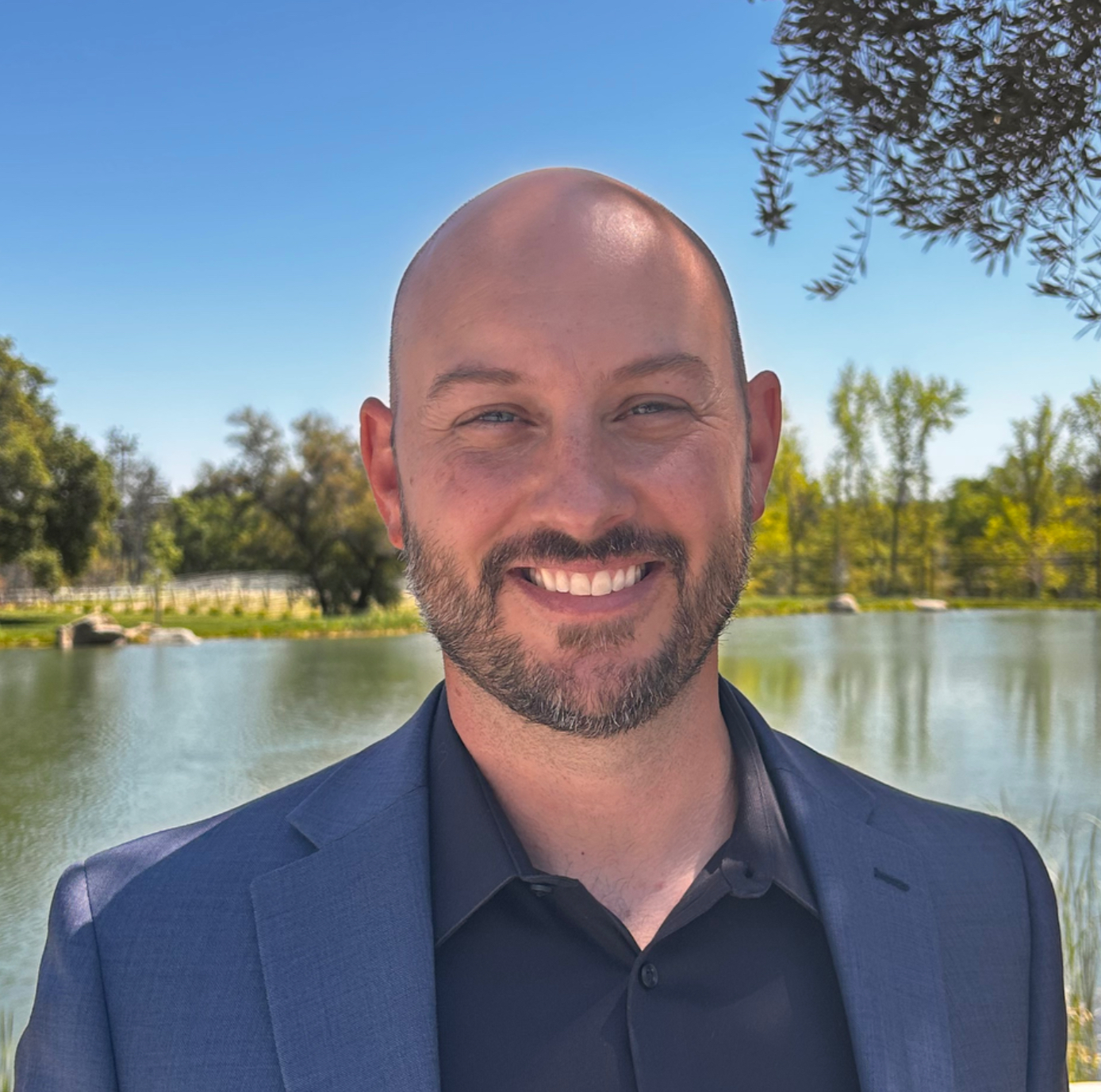
Brian McBrayer is the Director of Business Development for Lone Cypress Logistics. With a proven background in sales leadership and scaling successful businesses across multiple industries, Brian is now focused on applying those same process-driven growth principles to the company's freight solutions. Connect with Brian on LinkedIn.
Comments